AuthenticKilimanjaro
Climbing Packages/Mt. Kilimanjaro, Tanzania

Kilimanjaro via Lemosho Route — 8 Days

8 Days / 7 Nightschallenging
(36)
Duration8 days
From$2,650 pp
OperatorAuthentic Kilimanjaro
Book This Climb
About This Route

Overview


The Lemosho Route is widely regarded as the most beautiful approach to Kilimanjaro, and the 8-day itinerary offers the best acclimatization profile of any route — giving you a 95%+ summit success rate. Starting from the remote Londorossi Gate on the western side, you'll trek through pristine rainforest before emerging onto the vast Shira Plateau. The route joins the Machame path for the dramatic Barranco Wall and summit approach. Fewer crowds and more wilderness make this the connoisseur's choice.

What Makes It Special
01

Highest summit success rate (95%+)

02

Most scenic route — panoramic views throughout

03

Remote western approach — fewer crowds

04

Pristine Shira Plateau crossing

05

Best acclimatization profile on Kilimanjaro

06

Barranco Wall scramble included

Your Ascent

Day by Day


Day 1

Londorossi Gate to Mti Mkubwa Camp

Drive from Moshi to Londorossi Gate on the western side of Kilimanjaro. After registration, drive to the Lemosho trailhead and begin trekking through pristine montane rainforest. The trail is gentle and rich with birdlife, blue monkeys, and ancient trees.

Camp: Mti Mkubwa Camp (2,750m / 9,022ft)Meals: Breakfast, Lunch, Dinner
Rainforest trekBirdwatching
Day 2

Mti Mkubwa to Shira 1 Camp

Continue through the upper rainforest as it transitions to giant heather. Emerge onto the vast Shira Plateau — one of Kilimanjaro's collapsed calderas — with sweeping views of Kibo Peak to the east and Mt. Meru to the west.

Camp: Shira 1 Camp (3,505m / 11,499ft)Meals: Breakfast, Lunch, Dinner
Heather zone trekShira Plateau views
Day 3

Shira 1 to Shira 2 Camp

Traverse the Shira Plateau, one of the most spectacular high-altitude landscapes in Africa. The terrain is open and rolling with views of the Western Breach. Optional acclimatization hike to Shira Cathedral before settling at camp.

Camp: Shira 2 Camp (3,850m / 12,631ft)Meals: Breakfast, Lunch, Dinner
Plateau crossingOptional Shira Cathedral hike
Day 4

Shira 2 to Barranco Camp via Lava Tower

Climb to Lava Tower (4,630m) for crucial high-altitude acclimatization, then descend into the Barranco Valley. This 'walk high, sleep low' day is essential for your summit success. Barranco Camp has stunning sunset views of the Barranco Wall.

Camp: Barranco Camp (3,960m / 12,992ft)Meals: Breakfast, Lunch, Dinner
Lava Tower acclimatization (4,630m)Descent to Barranco
Day 5

Barranco Camp to Karanga Camp

Scramble up the famous Barranco Wall — the most exciting section of the climb. It's a non-technical scramble with spectacular exposure and views. Cross valleys to reach Karanga Camp for another night of acclimatization.

Camp: Karanga Camp (3,995m / 13,106ft)Meals: Breakfast, Lunch, Dinner
Barranco Wall scrambleValley crossing
Day 6

Karanga Camp to Barafu Camp

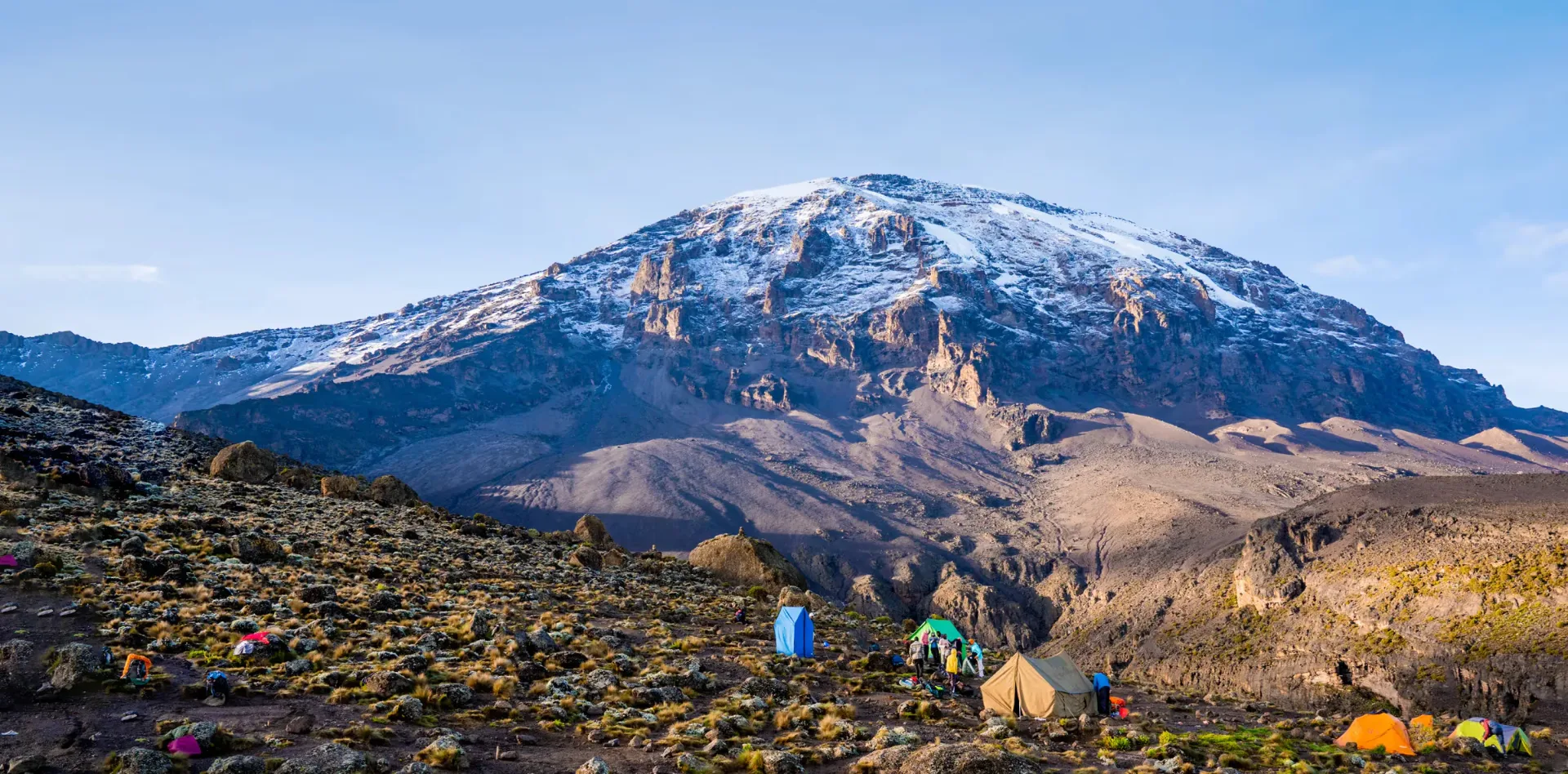
Ascend through alpine desert to Barafu Camp — your summit base. Arrive early, rest, and prepare. Your guide will brief you on the midnight summit attempt. Early sleep is essential.

Camp: Barafu Camp (4,673m / 15,331ft)Meals: Breakfast, Lunch, Dinner
Alpine desert trekSummit briefingRest
Day 7

Summit Night — Uhuru Peak (5,895m)

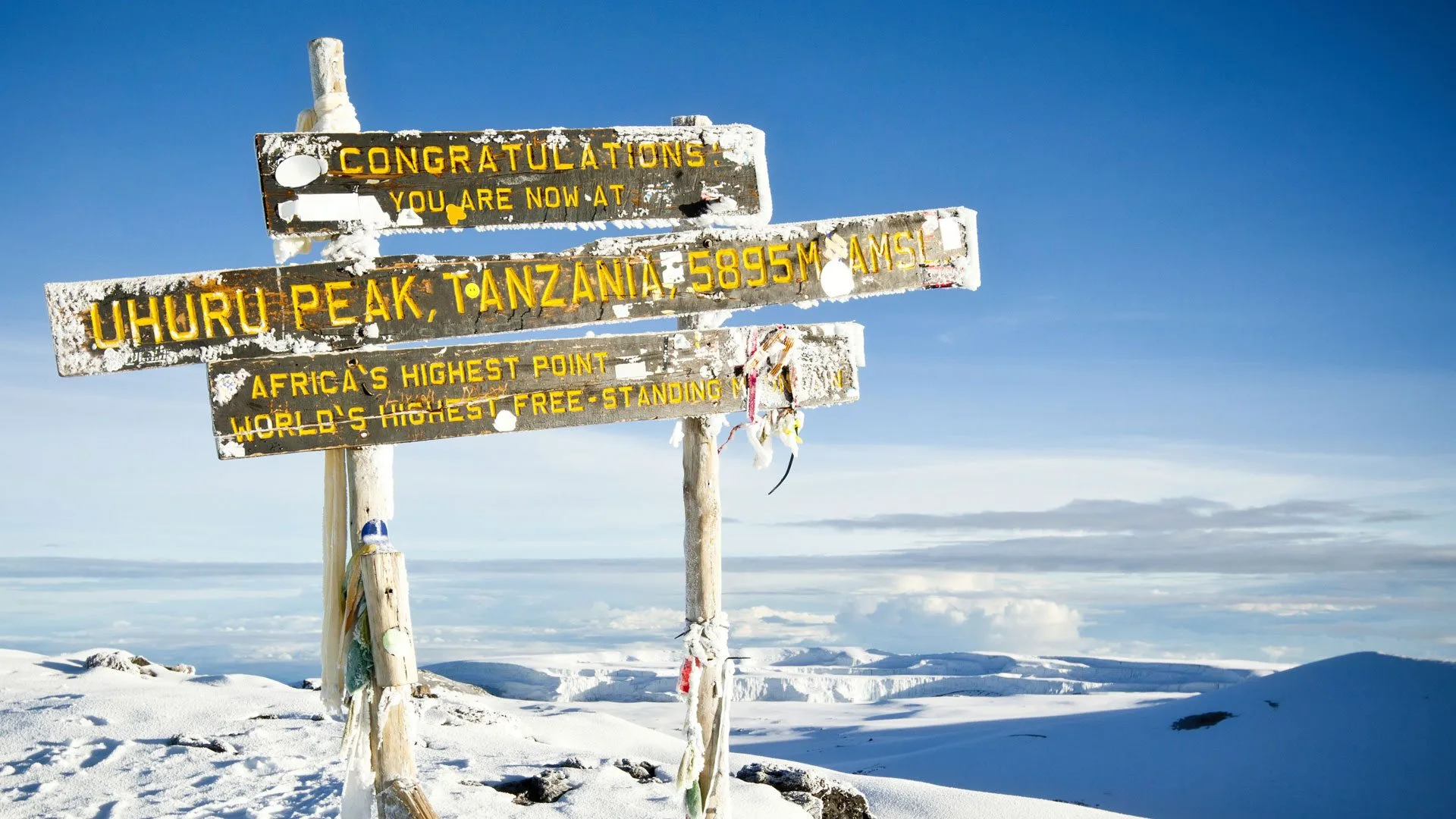
Midnight start. Steep switchbacks through scree under stars. Reach Stella Point at dawn, then the final traverse to Uhuru Peak — 5,895m, the Roof of Africa. Celebrate and descend to Millennium Camp.

Camp: Millennium Camp (3,820m / 12,533ft)Meals: Breakfast, Lunch, Dinner
Summit attemptUhuru Peak (5,895m)Descent
Day 8

Descent to Mweka Gate

Final descent through rainforest to Mweka Gate. Receive your summit certificate, celebrate with your crew, then transfer back to Moshi.

Camp: Hotel in MoshiMeals: Breakfast, Lunch
Rainforest descentCertificate ceremonyTransfer to hotel
What to Expect

Included

  • Park fees & rescue fees
  • Professional KINAPA-licensed mountain guide
  • Assistant guides (1:2 ratio)
  • Porters and cook
  • All meals on the mountain
  • Camping equipment (4-season tents, sleeping mats)
  • Portable toilet
  • Pulse oximeter & first aid kit
  • Airport transfers in Moshi/Arusha
  • 2 nights hotel in Moshi (pre & post climb)
  • Drinking water & snacks

Not Included

  • International flights
  • Tanzania visa
  • Travel insurance (mandatory)
  • Personal trekking gear & clothing
  • Sleeping bag (available for rent)
  • Tips for guides & porters
  • Alcoholic beverages
  • Personal expenses
Your Team

Authentic Kilimanjaro

Verified Operator

Moshi, Tanzania

Kilimanjaro summit specialists — expert local guides, proven routes, and 95%+ success rates on Africa's highest peak.

Common Questions

Frequently Asked Questions


How fit do I need to be to climb Kilimanjaro?

You don't need to be an elite athlete, but a good level of general fitness is essential. We recommend starting a training programme at least 8-12 weeks before your climb, focusing on cardiovascular endurance, leg strength, and hiking with a loaded backpack.

What is the success rate for reaching the summit?

The overall success rate across all routes is around 65%. However, longer routes like Lemosho and Northern Circuit have success rates of 85-95% due to better acclimatisation profiles. Choosing the right route significantly impacts your chances.

Do I need supplemental oxygen?

No. Kilimanjaro is climbed without supplemental oxygen. Your body acclimatises naturally as you ascend. Our guides carry emergency oxygen for medical situations, but it is not used as a climbing aid.

What are the sleeping arrangements on the mountain?

On camping routes (Machame, Lemosho, Rongai, Umbwe, Northern Circuit), you sleep in tents at designated campsites. The Marangu route is the only route with dormitory-style hut accommodation.

When is the best time to climb Kilimanjaro?

The two main climbing seasons are January-March and June-October. June-October is the most popular with clear skies and dry conditions. January-March is also excellent with fewer crowds and occasional snow at higher altitudes.

Is altitude sickness dangerous?

Acute Mountain Sickness (AMS) is common and usually mild — headaches, nausea, fatigue. Our guides monitor every climber using pulse oximeters and are trained to recognise serious symptoms. The key prevention strategies are slow ascent, proper hydration, and choosing a route with good acclimatisation.


Ready for the Roof of Africa?

Book your Kilimanjaro climb today.

Book This Climb — $2,650 pp

Secure booking via Inspiration Africa · Confirmation within 24 hours